
The comparison
Infrared sauna or sauna tent?
Infrared sauna or sauna tent: two ways to get warm
An infrared cabin works with panels that give off radiant heat. That heat passes through the air and is only absorbed when it lands on your skin. That is why an infrared cabin already feels warm at 50°C, while the air itself is not really hot. You sweat, but you are not sitting in the heat.
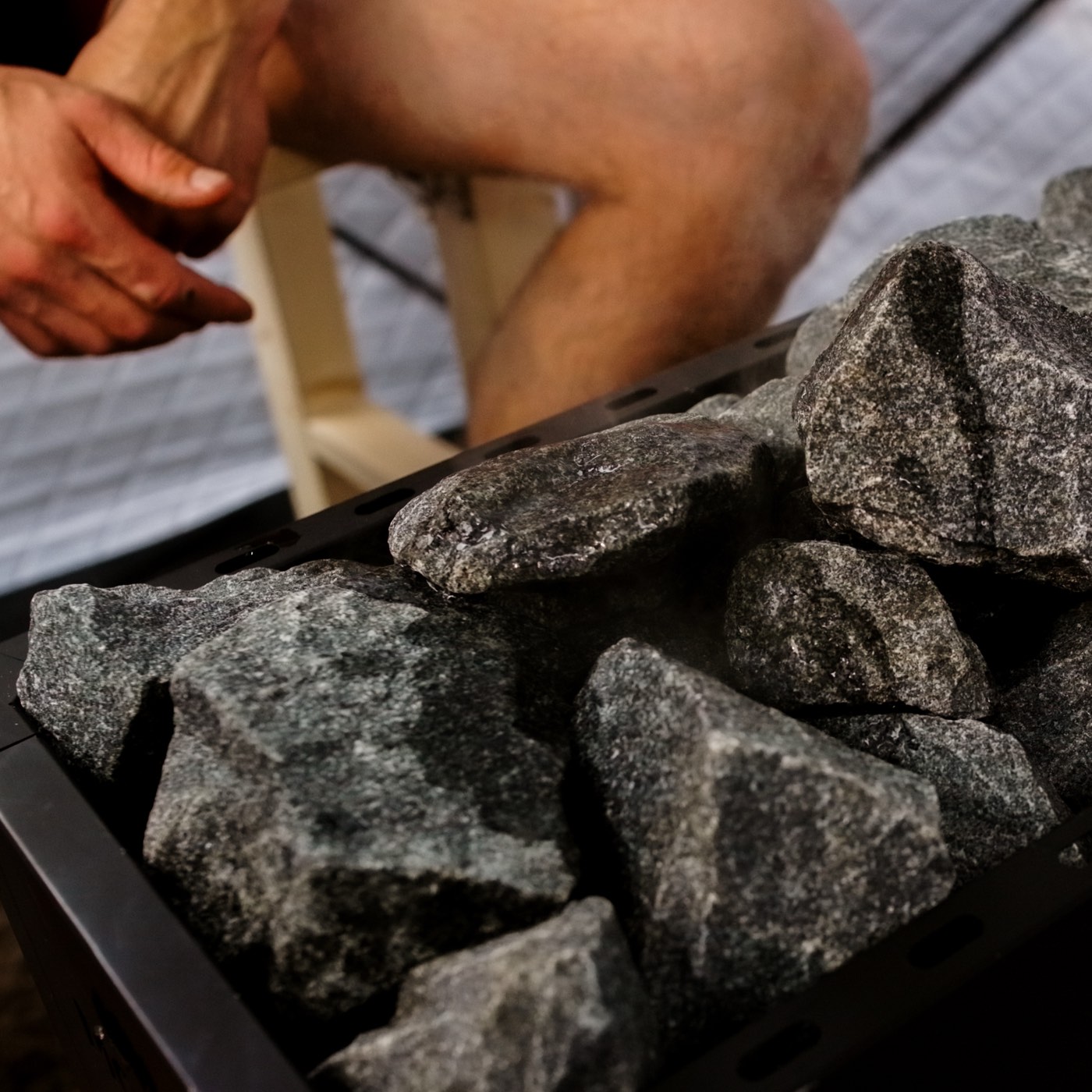
A wood-fired sauna tent does the opposite. The stove heats the air and a pile of stones, and you warm up by sitting in that hot air. Pour water on the stones and the humidity shoots up and it immediately feels a lot hotter. That effect simply does not exist with infrared.
Point by point
Where the difference lies.
The ritual
First you sweat, then you jump in.
Warm up in the tent, cool off in the lake, and head back to the heat together. That's the MOOSSE experience.


Fair is fair
When infrared is the better choice
If you have no garden, it will be infrared. A wood stove belongs outside, so without outdoor space a sauna tent simply drops out. The same goes if you live in an apartment where open fire is not allowed.
Infrared is also nicer if you tolerate heat badly. At 50°C you do sweat, but the stuffy feeling that some people get at 90 degrees stays away. For anyone who wants to sit for twenty minutes every day after training without making a fire first, it is more practical.
But anyone who wants the real sauna experience, with steam, with a crackling wood stove and with the contrast of the outdoors, will be disappointed by infrared. Then it is not a question of better or worse, but of a different product.
Which one suits you
Four situations, four answers.
You live in an apartment without a garden
Infrared. A wood stove belongs outside and needs a chimney, so a sauna tent is simply out. An infrared cabin fits in a bedroom or bathroom and runs on an ordinary socket.
You want real sauna heat with steam
Sauna tent. This is the point where infrared simply cannot do it: there are no hot stones, so there is no pouring of water and no humidity. If you want that burst of steam, you need a real stove.
You want twenty minutes every morning before work
Infrared. Pushing a button and sitting down ten minutes later beats lighting a fire. Firing a stove is a ritual, and a ritual fits badly into a morning routine.
You want to take it to the campsite or the water
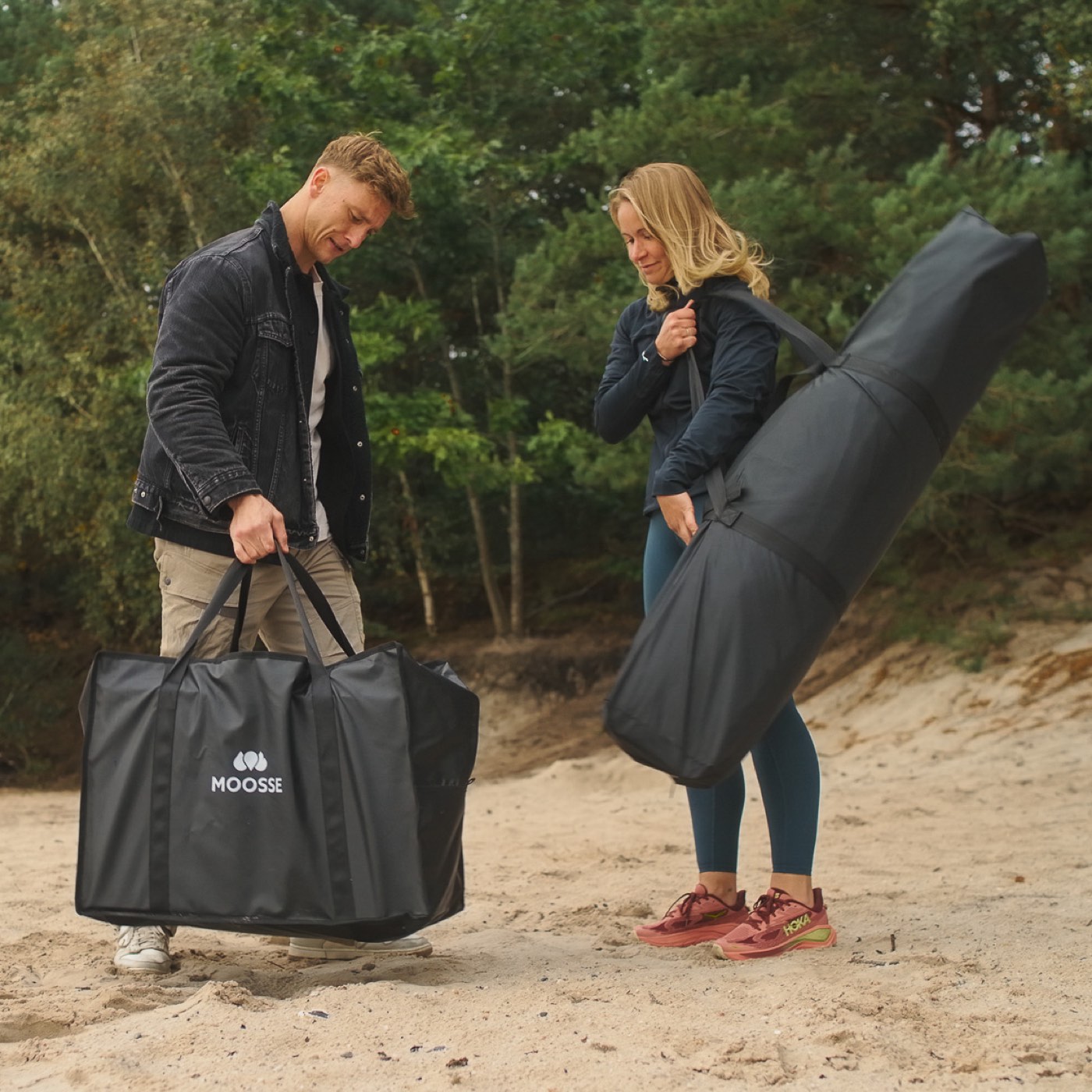
Sauna tent. An infrared cabin is a piece of furniture that stays where you put it. A sauna tent fits in two carry bags and works without electricity, so anywhere.
One more thing
Questions about infrared and sauna tents
The real heat, not the building project.
Wood-fired, up to 100°C, complete from €1,349. At your door within 5 working days.