
Wood-fired
A wood-fired sauna without a power socket.
- RVS 430 stainless steel stove, 23 kg
- Room for about 12 kg of sauna stones
- Up to 100°C after 30 minutes of firing
- No electricity, so usable anywhere
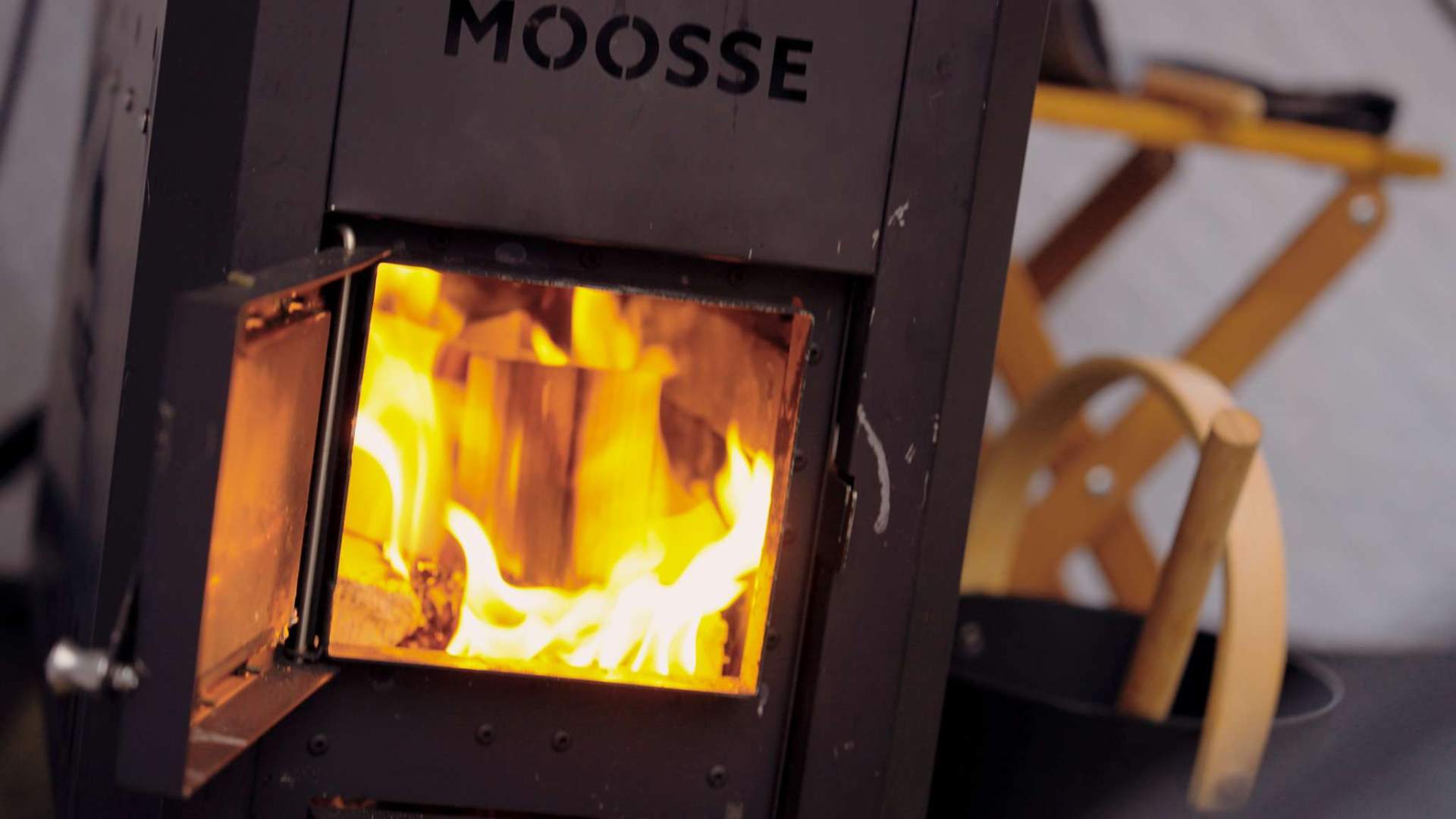
- RVS 430
- Material of the stove
- 12 kg
- Sauna stones
- 3 – 5 kg
- Wood per session
- 0 kWh
- Electricity used
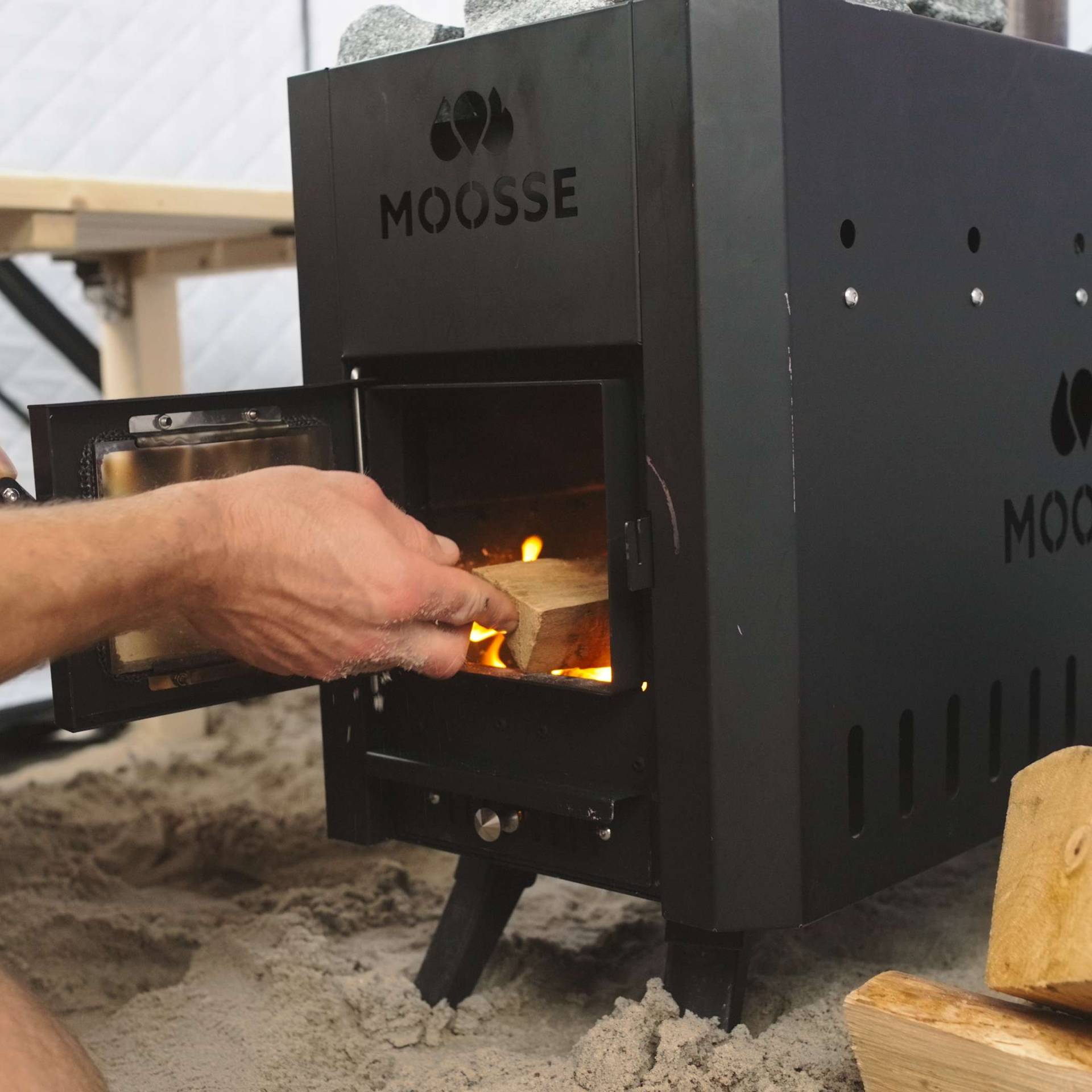
The firing
Dry hardwood, and nothing else.
A sauna stove is not an open fireplace. You fire it hot and keep it hot, and that only works with dry wood. Wet or fresh wood burns at half power, gives smoke instead of heat and fills your chimney with soot.
Topping up once halfway is enough for a session of an hour and a half.
- Beech, oak or birch, moisture content under 20 percent
- Kiln-dried firewood works best
- No painted, glued or impregnated wood
- Softwood gives soot and sparks, so better avoided
What a session costs
Firing versus electricity.
Per session of about an hour and a half, at an electricity price of €0.30 per kWh and kiln-dried firewood from the DIY store.
Wood-fired sauna tent
3 – 5 kg of wood per session
Electric sauna cabin
9 – 13 kWh per session
Infrared cabin
1.5 – 2 kWh per session
An infrared cabin is the cheapest per session, that is true. But infrared warms your skin and not the air, so you never get the heat and the steam that belong to a real sauna. They are two different things, which we put side by side point by point here.
Firing safely
Three rules you stick to.
Fireproof mat
The stove stands free on a non-flammable mat, not directly on grass, wood or artificial turf. Keep the space around it clear of towels and clothing.
Always ventilate
The chimney carries smoke away, but fresh air has to come in as well. Leave the vent open and never use the tent fully zipped shut without an air supply.
Never unattended
Never leave a burning stove alone, not even for a moment. Let the fire burn out instead of putting it out, and wait until the stove is cold before you pack up.
Maintenance
A wood-fired sauna asks something back.
That is the only real downside of wood-fired: there is work afterwards. Not much, but it is there, and it is better to know that beforehand than to find out afterwards. Why maintenance matters so much is covered in why saunas break down.
Every few sessions you take the ash out. Let the stove cool down completely first, shovel the ash into a metal bucket and put it outside on a non-flammable surface. Ash can glow for days without you seeing it, so never in a plastic bin or the garden waste bin.
You tap the chimney out now and then. With dry hardwood little soot builds up, but check it once per season and certainly when the draught gets weaker. A blocked chimney gives smoke in the tent, and that is the moment to stop and see what is going on.
After every session
- Let the stove burn out, do not put it out
- Let it cool down completely before you pack
- Let the tent dry before folding
Every season
- Check the chimney sections and tap them out
- Check the spark arrestor for blockage
- Check the sauna stones for cracks
One more thing
Questions about firing with wood
Fire your first session this weekend.
Complete with stove, chimney and spark arrestor from €1,349.